The Outer Worlds 2 is an action-packed sci-fi RPG released on October 29, 2025. Developed by Obsidian Entertainment (the creators of Fallout: New Vegas) and published by Xbox Game Studios, it’s the sequel to 2019’s award-winning first-person RPG The Outer Worlds. This time, players journey to a brand-new star system with new characters, factions, and adventures, all while enjoying the series’ trademark dark humor and player-driven storytelling. Whether you’re a returning Outer Worlds fan eager for nostalgia and new additions, or a newcomer drawn by its Fallout-esque charm, The Outer Worlds 2 promises a bigger, bolder experience that appeals to a broad audience.
In this comprehensive guide, we’ll cover everything you need to know about Outer Worlds 2: the platforms you can play it on, its key gameplay features and improvements, the game’s setting and story premise, all major factions and companions, as well as informative lists of quests, weapons, armor, planets, and other topics players are searching for. By the end, you’ll have an accurate overview to help guide you through Arcadia’s impressive world – whether you’re deciding to buy the game (perhaps during upcoming holiday deals) or seeking in-game information to aid your playthrough. Let’s dive in!
Available Platforms and Release Details
Release Date: The Outer Worlds 2 launched worldwide on October 29, 2025 for PlayStation 5, Windows PC, and Xbox Series X|S. It was revealed during Xbox showcases that this sequel would not be a console exclusive despite being published by Xbox – it debuted simultaneously on PC (Steam, Microsoft Store, and even Battle.net) and on Sony’s PlayStation 5. This multiplatform release ensured that a wide range of players could jump in from day one.
Game Pass: Like many Xbox-published titles, Outer Worlds 2 hit subscription services immediately. It’s available on day one with Xbox Game Pass – specifically included for Game Pass Ultimate and PC Game Pass subscribers (at launch, it wasn’t included in the lower-tier console-only plan). In practical terms, if you have Game Pass Ultimate on Xbox Series X|S or PC, you can download and play Outer Worlds 2 at no extra cost. This is a great perk that lowers the barrier for newcomers who might be on the fence, and it reflects Microsoft’s push to get the game in as many hands as possible.
Editions and Pricing: The Outer Worlds 2 was originally announced with a higher price, but the developers ultimately set the standard edition at $69.99 USD (down from a planned $79.99). There are two editions available: a Standard Edition (base game) and a Premium Edition. The Premium Edition includes the base game plus extras like five days of early access (for those who pre-ordered it), two future story DLC expansions (via a DLC Pass), a “Moon Man’s Corporate Appreciation” cosmetic pack, and a digital artbook & soundtrack. Console players can even buy a physical “Code-in-a-Box” edition – essentially a retail box with no disc, just a download code, for collectors who want a physical token. If you pre-ordered, you also received bonuses (e.g., Commander Zane’s Anti-Monopolist Pack with an exclusive weapon and armor set), giving early buyers some fun gear.
Holiday Deals Tip: With the 2025 holiday season approaching, keep an eye out for discounts or bundles. The Outer Worlds 2 is poised to be a popular gift, so retailers may offer holiday sales on the game itself. Additionally, this graphically impressive title can show off new hardware – so watch for console bundles (e.g. an Xbox Series X or PS5 bundled with the game) or deals on gaming accessories. If you’re considering an upgrade, the game’s vibrant alien worlds and smooth performance are a great showcase for a new 4K TV, a high-end PC GPU, or even a quality headset to immerse yourself in its rich audio. In short, it’s a great time to snag Outer Worlds 2 along with any gaming gear you need while seasonal sales last!
What Type of Game Is Outer Worlds 2?
Genre & Perspective: The Outer Worlds 2 is a single-player action role-playing game (RPG). Like its predecessor, it emphasizes first-person gameplay – but notably, the sequel adds a full third-person camera option as well. This means you can switch between playing in first-person (for that classic immersive FPS/RPG feel) or third-person, which many fans requested after the first game. The inclusion of third-person support (absent in the first Outer Worlds) is great news for players who enjoy seeing their customized character and having a wider field of view during exploration.
RPG Elements: Expect deep character customization and role-playing depth. At the start, you create your character (the “Commander”) and can customize their appearance, assign attribute points, and even choose an origin background that gives unique bonuses and dialogue options. For example, you might choose to be an ex-convict, a former law officer, a scientist, a gambler, etc., and these backgrounds will meaningfully impact certain quests and interactions in the game’s narrative. Throughout the game, you’ll level up and invest in a variety of skills (combat, stealth, tech, dialogue, leadership, etc.), and unlock over 90 perks to further tailor your playstyle. Obsidian has a reputation for “reactive RPG” design, so your character build and choices will influence how scenarios play out, what options you have in dialogue, and even which endings you can get.
Game Style and Comparisons: The gameplay is often likened to a blend of Fallout: New Vegas and Mass Effect in a tongue-in-cheek space setting. You can think of Outer Worlds 2 as a story-driven open-world (or rather, open-galaxy) RPG, where you explore multiple planets rather than one contiguous map. It’s not a massive sandbox like Bethesda’s latest titles, but rather a collection of sizable hub worlds and areas to explore – similar to the first game, but on a larger scale. The tone is a unique mix of satirical and serious: the game delivers sharp satire of mega-corporations and capitalism (as a narrative theme), coupled with comedic writing and absurd situations, all layered over a genuinely engaging sci-fi story. Players who enjoy narrative freedom will be happy to know you can play as a hero, a villain, or something in between – your decisions (both moral and strategic) shape the story’s outcome.
Audience: Being single-player only (no co-op or multiplayer modes), The Outer Worlds 2 is perfect for those who love solo adventures and story-rich experiences. Newcomers to the franchise need not worry – the sequel tells a standalone story in a new location, so it’s not required to have played the first game to understand it. (Of course, returning players will catch extra references and lore connections, but the plot is designed to be newcomer-friendly.) If you’re new to gaming or RPGs, don’t be intimidated: Outer Worlds 2 allows many playstyles – whether you prefer running and gunning, sneaking around, or talking your way out of trouble, the game accommodates it. The difficulty is adjustable and you can pause or slow time in combat using special abilities, so it’s accessible even if action games aren’t your forte.
Critical Reception: Early reviews for The Outer Worlds 2 have been generally favorable, indicating it lives up to its predecessor’s reputation. Many critics praised its expanded scope and improved gameplay, noting scores around 8/10 or higher from major outlets. This positive reception should reassure players that Outer Worlds 2 is a quality RPG experience – Obsidian has clearly built on what fans loved the first time around.
Key Features and Improvements in Outer Worlds 2
One of the goals of The Outer Worlds 2 is to make everything “bigger, bolder, and more unpredictable” than the first game. Here’s a rundown of the major new features and enhancements that define the sequel:
- New Star System & Story: Instead of Halcyon (the colony from the first game), the sequel is set in the Arcadia system, a completely new colony with its own lore and conflicts. This means all-new locations, factions, and characters to discover (more on these below). The plot stands on its own, so you’re uncovering fresh mysteries – notably the phenomenon of space-time rifts disrupting the colony – rather than continuing the previous storyline. Fans will appreciate that certain corporations and themes from the original return in spirit (e.g. the infamous Board and corporate satire), but Arcadia offers a fresh adventure with higher stakes (literally involving the fate of the colony and possibly the galaxy).
- Improved Visuals and Scale: Outer Worlds 2 leverages the power of new hardware (PS5/Series X|S) to deliver better graphics and larger environments. Expect more detailed worlds, improved lighting and creature designs, and generally a more polished look. The developers even joked in trailers that this game has “more graphics” and is roughly two times bigger than the first game (after taking three times longer to make). In practical terms, the playable areas on each planet are more expansive, with more to explore and more dynamic scenery. There’s also a day-night cycle and weather effects (like the violent electrical storms on Praetor) that add atmosphere and gameplay variety.
- First-Person or Third-Person Gameplay: As mentioned, the addition of an optional third-person mode is a big change. You can now switch the camera to see your character and surroundings from behind, which is great for situational awareness or just admiring your cool armor. This was confirmed by Obsidian in their showcases. You can still play entirely in first-person if you prefer – the third-person view is a feature you can toggle on or off, catering to both styles.
- Enhanced Combat Mechanics: Combat has gotten a serious upgrade, aiming to feel more fluid and action-oriented. Obsidian drew inspiration from top shooters like Destiny and Halo to improve gunplay– so aiming, shooting, and weapon feedback are smoother and more satisfying than before. Several new mechanics spice up fights:
- Stealth Takedowns & Melee Finishers: You can now perform silent takedowns on enemies if you sneak up, or execute flashy melee finishing moves. Stealth players have more options than just sniping from afar – you can creep behind an enemy and quietly dispatch them, which was not possible in the first game.
- Parkour and Mobility: Your character is much more mobile. A double-jump ability has been added, letting you reach high ledges or leap over obstacles, and there’s a mantling system (climbing up edges) so navigation feels freer. You can also perform sliding maneuvers and even dropkicks in combat, making movement in fights more dynamic. If you enjoyed games like Dishonored or Cyberpunk, Outer Worlds 2 brings a bit of that agile feel to its traversal and combat.
- Gadgets and Abilities: New high-tech gadgets expand your tactical toolkit. For example, the N-Ray Scanner allows you to detect cloaked enemies through walls, ensuring sneaky foes can’t surprise you. There’s also a feature called Temporal Detonation, which lets you pause combat briefly – essentially freezing the action to plan a strategic move or set up a deadly combo. This sounds like an evolution of the original’s “Tactical Time Dilation” (the slo-mo ability); it underscores that time-manipulation in combat is even more useful now. Traditional Tactical Time Dilation (TTD) still exists and is reportedly improved (faster, more impactful) for those who like to slow time and target enemy weak points.
- Expanded Arsenal of Weapons: Outer Worlds 2 greatly expands the variety of weapons (see the Weapons section below for details). In short, you’ll wield everything from conventional guns (pistols, rifles, shotguns, etc.) to outrageous Science Weapons with bizarre effects. Obsidian revealed some fun examples:
- The Boarst Blaster – a gun that fires explosive (or even healing) tumors at enemies (gross and hilarious, fitting the game’s dark humor).Rookie’s Reward – a weapon that actually levels up alongside you and celebrates each level milestone with confetti.The Pop-Up Gun – launches advertising drones that distract enemies with commercials (satirizing in-game corporations).The Armageddon – shoots out tiny literal arms that punch enemies to death.Spectrum Dance Saber – a high-tech sword that rewards you with extra damage if you strike in rhythm to a beat, almost like a dance mini-game in combat.The Big Bang – a devastating weapon harnessing rift energy; it uses rare ammo but delivers huge plasma damage.
- Armor, Gear, and “Science Armor”: Not only weapons, but armor has gotten some love too. The game still features armor suits and helmets across Light, Medium, and Heavy classes that you can mix-and-match for protection and stat bonuses. However, Outer Worlds 2 introduces Science Armor – special gear with unique, often quirky effects (similar to science weapons). One standout example is “GARY”, a living suit of armor that can actually attack enemies autonomously when worn. Yes, your armor itself can bite back at foes! There are also fun outfits like the Premium Moon Man Armor (a throwback to Spacer’s Choice’s mascot with a giant Moon helmet) and many others to discover. You can mod your armor with gadgets that improve skills or resistances (for instance, installing a respirator to filter toxins, or lining your suit with shock padding). In short, gear isn’t just for defense – it can augment your playstyle in meaningful ways. Outer Worlds 2 clearly encourages you to experiment with different loadouts, whether you want max stealth, heavy firepower, or a goofy science build where your suit and weapons do wild things.
- Deeper RPG Systems: Beyond combat, the core RPG systems have been deepened:
- The skill system now offers 12 core skills (including new ones like Hacking and Engineering) to invest in, and each skill feels impactful. Every point matters more now, and reaching certain skill thresholds can unlock significant perks or dialogue options.
- The Perk system is expanded (90+ perks) with more variety, reportedly drawing inspiration from Fallout: New Vegas’s memorable traits and perks. You can really fine-tune your character with perks that, for example, boost companion effectiveness, enhance specific weapon types, or even change the game rules (one perk might increase combat difficulty in exchange for better loot, etc.).
- The unique Flaws system returns, and it’s improved. Flaws are voluntary negative traits your character can accept in reaction to your playstyle (e.g. taking lots of fall damage might offer you a “Acrophobia” flaw making you weaker at heights, in exchange for an extra perk point). In Outer Worlds 2, flaws have permanent impacts that meaningfully affect your gameplay– they’re not to be taken lightly. New creative flaws are included too; one example from an IGN preview is “Foot in Mouth” – if you frequently dither in dialogue menus, you can develop this flaw which forces a 15-second timer on all your dialogue choices going forward (and if time runs out, your character blurts out a random line!). Such flaws add challenge and replay value for those who want it.
- Origins & Traits: As mentioned earlier, you choose a background origin and optional traits at character creation which give special bonuses and role-playing flavor. For instance, an origin might be “Suburban Squatter” or “Board Approved” which could influence how certain factions perceive you, while a trait might be something like “Dumb” (the classic “dumb dialogue” option returns – yes, you can still make a low-intelligence character and get hilarious dialogue choices). These starting choices can open up unique quest solutions or challenges, increasing the game’s reactivity.
- Companions & Crew Upgrades: Recruiting companions was a beloved feature of the first game, and it’s even better now. You can recruit up to six companions throughout the story (details on each companion in the Companions section below). Each companion has their own personal questline and will react dynamically to your choices. In Outer Worlds 2, Obsidian has made companions more reactive and less linear – they can even disagree with you or leave (or be killed) if things go south, adding weight to your actions. Combat-wise, you can still bring two companions with you at a time. They have unique abilities you can direct in battle, and you can equip them with weapons/armor to suit roles (tank, sniper, etc.). A new addition is that companions are each tied to one of the main factions, which means their loyalties and perspectives may come into play during faction conflicts. Managing your crew’s approval might feel a bit like Mass Effect or KotOR, where you consider their beliefs. However, note that romance is NOT an option – these relationships are platonic co-workers/friends only. Overall, expect a more diverse, outspoken crew that really enriches the role-playing aspect.
- Player Ship & Travel: You once again have your own spaceship serving as a mobile base. In Outer Worlds 2, your ship is called “The Incognito”. From your ship’s navigation terminal, you can select destinations across Arcadia’s star map as you progress the story. The Incognito is where your companions hang out (and banter with each other) when not in your party. It’s also where you can store items and perhaps see reflections of your decisions (in the first game, your ship accumulated trophies or news clippings based on what you did – something likely to return). Fun fact: unlike some games where the ship is just a menu, here you can walk around it and even encounter little events or dialogues aboard. It’s truly your home between adventures. Plus, the Incognito can be upgraded or at least decorated with certain quest rewards (keep an eye out for collectibles!). Travel is not seamless (you don’t manually fly), but loading between planets is relatively quick on new consoles, and there’s a fast-travel system once you discover locations on a planet, to minimize backtracking.
- Dynamic World and Radio: The world of Arcadia feels alive and reactive. For one, the game features faction reputations – your actions can raise or lower your standing with various groups, which affects NPC behavior, quest availability, and even endings. You’ll often face mutually exclusive choices (help one faction at the expense of another). Additionally, Obsidian added a cool immersive touch: there are faction-specific radio stations that broadcast in the game, similar to the radio in Fallout. In fact, there are three different radio channels, each run by one of the main factions, with 20 original songs each and live DJ commentary that changes based on your in-game decisions. For example, if you majorly help or hinder a faction, you might hear the radio DJ praising or cursing “a certain off-world agent” – that’s you! This reactive radio is a fun way the game world acknowledges your impact while providing catchy retro-futuristic tunes as you explore. It’s a great example of the extra mile the developers went to make Arcadia feel like a real, lived-in colony.
- Length and Replayability: The Outer Worlds 2 is significantly larger than the first game in content. The main story alone can take roughly 25-35 hours to complete, and a full playthrough with substantial side content can easily reach 50+ hours. The quest design encourages replayability: many quests have multiple solutions and outcomes (some reports say up to “six different solutions” for some missions depending on your approach!). There are branching paths and at least a few distinct endings influenced by which faction(s) you side with or betray. Completionists will also find collectibles, lore terminals, and hidden quests off the beaten path. And with six companions but only two active at once, plus the possibility of different background traits and flaws, there’s huge incentive to replay the game making different character builds and story choices. If you crave even more content, note that the developers have two story DLC expansions planned (the Premium Edition already includes access to those when they release). These DLC will likely come out in 2026 and further expand the narrative, possibly similar to how The Outer Worlds 1 had the Peril on Gorgon and Murder on Eridanos expansions. In summary, Outer Worlds 2 offers plenty of bang for your buck and reasons to revisit Arcadia multiple times.
Story Premise and Setting
The Outer Worlds 2 is set in an alternate future timeline and continues the franchise’s unique sci-fi lore. Here’s the basic premise:
It is the year 2362, and humanity’s colonization of space is driven by massive corporations and strange science, in a timeline where early 20th-century history diverged from our own. (In this universe, U.S. President William McKinley was never assassinated in 1901, meaning Theodore Roosevelt never became president to bust the trusts – resulting in unchecked mega-corporations dominating society. As a result, hyper-capitalism runs amok and corporations literally own colonies across the galaxy.) Faster-than-light travel allowed these companies to terraform distant planets, often with disastrous or bizarre results. The first game took place in Halcyon, a colony ruled by a corporate Board; Outer Worlds 2 moves the action to a different colony called Arcadia.
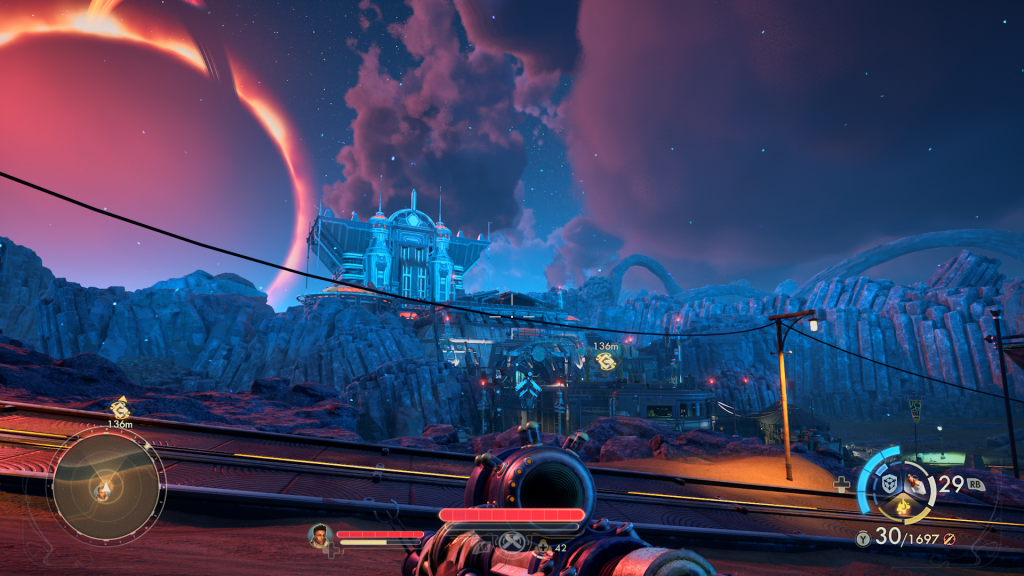
Arcadia is a remote star system far from Halcyon, with multiple habitable planets and moons that were colonized in humanity’s expansion. Crucially, Arcadia is the birthplace of the “skip drive” technology – the FTL method that enables interstellar travel. This significance means Arcadia has advanced research installations and strategic importance. However, something has gone terribly wrong: mysterious rifts in space-time have begun appearing across Arcadia. These rifts are essentially tears in reality, and they have cut off Arcadia from Earth and other colonies, disrupting interstellar trade and communication. (In fact, it’s hinted that the events here tie back to Halcyon’s issues – the rifts might explain why Earth lost contact with Halcyon decades ago.) These anomalies threaten to destroy Arcadia’s future if left unchecked.
You play as a Commander in the Earth Directorate, the central Earth government’s space agency. The Earth Directorate was mentioned in the first game but takes a major role now. Essentially, you’re an agent sent from Earth to investigate and resolve Arcadia’s crisis – the rifts and the chaos surrounding them. At the start of the game, you arrive in Arcadia under orders to figure out what’s causing the rifts and to reestablish order. However, you quickly find that Arcadia is on the brink of war: multiple factions are vying for control amid the turmoil.
Factions Conflict: There are three main power factions in Arcadia’s colony, each with their own agenda regarding the rifts and the future of the system:
- The Protectorate – a totalitarian colonial government that currently claims to govern most of Arcadia. They position themselves as the “benevolent rulers” bringing order, but in practice they’re authoritarian and obsessed with control. The Protectorate also holds a monopoly on superluminal travel in the region (they control the technology and routes for interplanetary jumps). Think of them as a militaristic regime that believes only they can safely handle the rift crisis – by locking everything down under their rule.
- Auntie’s Choice – a mega-corporation formed from the merger of two infamous companies from the first game: Auntie Cleo’s (a pharma/chemicals corp) and Spacer’s Choice (a consumer goods and firearms corp). Having merged, Auntie’s Choice now wields enormous power and a private army. They have invaded Arcadia and been waging an assault for roughly three years prior to the game’s starr. Auntie’s Choice seeks to overthrow the Protectorate government and monopolize the colony (and especially the valuable skip-drive technology) for their own profit. They represent the corporate capitalism taken to an extreme – literally trying to run the colony like a business venture. In the game’s events, Auntie’s Choice forces are actively attacking key locations (one trailer depicts this as the “Auntie’s Choice invasion of Arcadia” that you find yourself in the middle of).
- The Order of the Ascendant – a religious cult-like faction that believes the universe is governed by mathematical equations and cosmic destiny. They appear to be a fanatical offshoot of the Order of Scientific Inquiry (a group referenced in game lore) who have turned scientific obsession into a faith. The Order of the Ascendant views the rifts as possibly divine or transcendent events; they want to harness Arcadia’s resources to bring about a “new age of enlightenment” for humanity. In more practical terms, they’re a wildcard faction – neither corporate nor state – with potentially dangerous technology and zealotry at their disposal. They oppose both the Protectorate and Auntie’s to fulfill what they see as a higher purpose.
These three groups are in a deadly tug-of-war. As the player, your choices will shape the balance of power among them You can ally with one, play them against each other, or even try to find a more independent path. For example, you might help Auntie’s Choice take over if you’re cynical and want to empower the corporation, or you might bolster the Protectorate to maintain order – or side with the Order if you believe neither corporatocracy nor dictatorship is the answer. Each major faction has leaders, questlines, and endings associated with them. There are also smaller side factions (for instance, the Earth Directorate itself, which you technically report to; the Sub Rosa smugglers who run the black market Free Market Station; possibly local rebel groups, etc.), but the big three are the main focus.
The Main Story Objective: Investigating the rifts forms the backbone of the main questline. Early in the game, as an Earth Dir agent, you’ll start by looking into these phenomena – which takes you to different planets where rifts have opened or where research is happening. Along the way, you get entangled in the faction conflict. The central mystery is what is causing the rifts? – since they threaten to literally tear Arcadia apart or isolate it forever. Hints point to the very skip drives that enabled colonization: overuse or experiments with skip-drive tech might be fracturing space-time. In fact, the rifts might be connected to how Halcyon (the first game’s colony) lost contact with Earth (i.e. a widespread problem). Uncovering this and deciding what to do about it – close the rifts, use them, destroy the tech causing them – becomes a major player choice.
Obsidian has teased that ultimately “the fate of the entire colony – and the galaxy – rests in your hands”. So expect that by the endgame, you’ll make some big decision regarding Arcadia’s future, likely choosing which faction (if any) ends up in control or whether the rift crisis is resolved peacefully or with explosive consequences. Multiple endings are likely, and they will reflect which factions you helped or hindered (“church, state, and capitalism – who will win? That’s up to you,” as the devs slyly say).
Throughout the story, The Outer Worlds 2 maintains a tone of satire and player agency. The game often breaks the fourth wall or pokes fun at common tropes – for instance, the announcement trailer humorously admitted the devs had “no actual gameplay to show yet” and parodied typical game trailer cliches. In the game itself, you’ll find plenty of corporate propaganda, humorous dialogue options (especially if you make a “dumb” character – yes, you can still select intentionally stupid dialogue lines for laughs), and morally grey situations. Like the first game, expect to be confronted with choices where neither outcome is purely good – do you side with the shady corporation or the authoritarian government, for example. The theme of corporate greed vs. individual freedom remains central, and the writing doesn’t shy away from satirizing real-world issues via its exaggerated future setting.
Overall, the narrative is engaging but never too self-serious. It balances high stakes (the colony could collapse) with tongue-in-cheek humor (companions making snarky comments, or quest names referencing pop culture). It’s very much your story – as Obsidian’s motto for the game says: “Your worlds, your way”. Will you fix Arcadia or further fracture it? Become a beloved hero, a feared tyrant, or an anarchist? The choice is yours, and that makes the journey through the story truly compelling.
Factions of Outer Worlds 2
The world of Arcadia is populated by numerous factions, big and small. Here we’ll focus on the major factions that drive the main plot and a few notable secondary groups players might encounter.
- The Protectorate: “Benevolent” Colonial Government (Authoritarian) – The Protectorate is the ruling government of Arcadia, essentially a military junta that took power to enforce order. They present themselves as protectors of the colony’s citizens, but in reality they are a totalitarian regime. The Protectorate controls key infrastructure and, importantly, the skip-drive travel network – they alone manage faster-than-light ships in Arcadia. This monopoly is partly why Auntie’s Choice wants them gone (whoever controls skip travel controls trade and movement). As a faction, the Protectorate values security, stability, and control above all. Their troops are well-armed and disciplined, and they don’t tolerate dissent (there are rumors of curfews, propaganda broadcasts, and political prisoners under their rule). In the game, if you work with the Protectorate, expect quests involving crushing rebellions or securing scientific facilities from corporate saboteurs. They appeal to players who think a strong government is needed to handle the rifts responsibly. However, siding with them might mean upholding a draconian system. Notable figures likely include Protectorate commanders or governors who will test your loyalty. In summary: The Protectorate stands for order and authority – joining them could bring peace through dominance, but at the cost of freedom for Arcadia’s people.
- Auntie’s Choice: Megacorporation & Private Military – Born from the merger of Spacer’s Choice and Auntie Cleo’s (two competing companies from the first game), Auntie’s Choice is now a behemoth conglomerate and the main corporate faction in Arcadia. About three years before the game’s events, Auntie’s Choice initiated a campaign to seize Arcadia – effectively a hostile takeover of an entire colony. They have established a beachhead and are actively fighting Protectorate forces across the system. Auntie’s Choice’s goal is to turn Arcadia into their own corporate fiefdom, monopolizing its resources and technology for profit. This includes controlling the rifts if possible – perhaps to weaponize them or charge others for access. The faction’s name “Auntie’s Choice” hints at how they’ve combined the folksy branding of Auntie Cleo (a “kindly aunt” marketing facade) with the budget crudeness of Spacer’s Choice. In practice, they’re ruthless. They employ mercenaries, combat drones, and use a lot of flashy branded tech. In the game, working with Auntie’s Choice might involve sabotage missions against the government or securing lucrative experimental data. Expect darkly comic elements – e.g., one quest might have you distribute “free samples” of a drug that turns out to be dangerously addictive, all in the name of corporate strategy. If you align with Auntie’s, you’re embracing the hyper-capitalist angle, essentially backing the idea that Arcadia should be run like a business. They might reward you with superior equipment (after all, they manufacture many weapons/armors in the colony) and piles of bits (money), but morally, you’ll be supporting a company that treats people as expendable assets. In summary: Auntie’s Choice represents unfettered corporate power – siding with them can lead to a profit-driven Arcadia (and personal riches for you), but likely an exploitative society where citizens are merely consumers or test subjects.
- Order of the Ascendant: Religious/Scientific Cult – The Order is the most mysterious of the factions. They believe mathematics and science can attain a form of divinity or “ascendance” for humanity. Lore notes that they splintered off from the Order of Scientific Inquiry, which in the first game was a legitimate scientific institution. The Ascendant sect took those ideas to an extreme, becoming quasi-religious zealots. They view the rifts as perhaps sacred or predestined – maybe tests from the universe, or opportunities to transcend normal reality. Their endgame is to use Arcadia’s immense computational resources (like the Archive supercomputer on Cloister) and exotic phenomena to “bring a new age of enlightenment”. In plain terms, they might be trying to evolve humanity or unlock immortality, etc., through science that borders on mysticism. The Order’s methods can be drastic. For instance, they may perform dangerous experiments or sacrifices in pursuit of their goals. If you interact with them, expect morally complex tasks like retrieving experimental subjects or deciding whether to allow a risky ritual to proceed. The Order’s members range from scholars to fanatics; one of your companions (Aza) is actually a zealous cultist of this group, giving you inside perspective. Aligning with the Order might appeal if you role-play as someone curious about higher knowledge or disillusioned with both governments and corporations. They stand apart in that they don’t seek conventional power or profit – they seek truth (as they see it) at any cost. If you side with them, Arcadia’s future might be one of radical change – perhaps enlightenment, perhaps catastrophe. In summary: The Order of the Ascendant embodies idealism turned fanaticism. Supporting them could lead to scientific breakthroughs or a theocratic rule by “enlightened” ones, but it’s a high-risk, high-reward path that might destabilize reality even further.
- Earth Directorate: (External Faction – Your Employer) – While not one of the warring local groups, the Earth Directorate (often just “Earth Dir”) is important. This is basically Earth’s central government oversight for colonies. They sent you to Arcadia to investigate, and presumably they want Arcadia back under stable control (and the rifts closed). Earth Dir’s stance on the three factions is neutral pragmatism: they likely want whatever outcome secures the colony and reopens communication. Throughout the game, you might report back to an Earth Dir superior or get optional objectives that align with Earth’s interests. Depending on your choices, you could betray your Earth bosses if you go rogue (for example, joining Auntie’s Choice to get rich might conflict with Earth’s directives). Or you can remain a dutiful agent trying to carry out orders – perhaps facilitating a peace or a specific faction victory that Earth favors. The Earth Directorate also is a link to the first game’s events; they are keenly interested in the cause of these rifts since Halcyon’s fate was tied to it. While not an official “joinable” faction, Earth Dir influences the ending slides (there may be an ending where you call in Earth fleet support or something if you stick to your duty). Keep in mind, one of your companions (Niles) is an Earth Dir loyalist, which might tug you toward fulfilling your original mission.
- Sub-Factions & Others:Outer Worlds 2 also features various smaller factions or groups:
- Sub Rosa – A criminal syndicate or smugglers’ guild that operates Free Market Station (which itself is a black-market hub built into a wrecked ship). They deal in contraband, stolen goods, and likely play both sides of the war by selling to all comers. You might do quests for Sub Rosa if you venture into the underworld of Arcadia; it could involve heists or fencing stolen corporate tech.
- Iconoclast Refugees / OSI remnants? – Given the Order of the Ascendant’s origin, there might be remnants of the original Order of Scientific Inquiry or dissidents from Halcyon (like Iconoclast rebels) floating around Arcadia. These would be minor references for lore fans.
- Local Communities – Not everyone on Arcadia falls under these big banners. There are settlers, miners, and colonists just trying to survive. For example, Arcadia has at least one mining community that you’ll encounter. Their stance might depend on who treats them better. Side quests often involve helping towns or outposts deal with problems (marauding creatures, supply shortages, etc.). These stories humanize the world and force you to see consequences: e.g. do you divert resources to help civilians or give everything to your faction’s war effort?
- The Board – The monolithic corporate Board from Halcyon doesn’t directly control Arcadia (since Arcadia was separate), but interestingly, Auntie’s Choice essentially is two Board member companies acting on their own. There might be intrigue about whether the Board back on Earth sanctions Auntie’s Choice actions or if they’ve gone rogue. Possibly Earth Dir (on behalf of the Board) wants to stop Auntie’s if it threatens Earth’s balance of power.
- Others: It’s possible you’ll meet mercenary bands (maybe remnants of Spacer’s Choice security forces), rogue AI, or alien native groups (if any intelligent life existed in Arcadia pre-colonization, though none is confirmed – likely just wildlife). Each planet has its own hazards and possibly its own minor factions (for example, on Eden there might be a farmers’ cooperative, on Dorado a miners’ union, etc., which could influence local quests).
To succeed in The Outer Worlds 2, you’ll have to navigate these faction relationships carefully. The game tracks your Reputation with major factions. Doing quests for a faction increases your standing with them (unlocking benefits like vendors with special items or faction-aligned companions approving your actions), while harming them (e.g. killing their members or helping their enemies) will lower rep and can even make them hostile. It’s possible to play factions against each other for a while, but eventually you may need to choose sides in critical moments. For instance, a main quest might force a decision like “hand over the MacGuffin to the Protectorate or to Auntie’s Choice” – a point of no return that locks an ending path. However, clever players might find ways to double-cross or broker truces for unique outcomes.
In summary, the factions system in Outer Worlds 2 offers a lot of role-playing depth. It’s not just background flavor – it fundamentally alters the storyline and missions you’ll get. Want to be a corporate sellout, a rebel freedom-fighter, a cultist believer, or simply a double agent serving Earth? The game lets you pursue any of these paths. And because each faction has its own weapons, armor styles, and even radio station broadcasts, your gameplay experience will feel distinct depending on whom you align with. Choose wisely, Spacer!
Companions (Allies) in Outer Worlds 2
One of the highlights of The Outer Worlds 2 is the colorful crew of companions you can recruit on your journey. These companions (also referred to as followers, allies, or crew members) not only aid you in combat but have their own personalities, backstories, and questlines. There are six recruitable companions in total, each tied to one of the main factions or themes in Arcadia. You can have up to two companions accompany you at a time (and swap them at your ship), but you’ll meet all six through the course of the story if you explore thoroughly.
Here’s an organized list of all companions and a brief overview of each:
- Niles – The Loyal Agent. Niles is a fellow Earth Directorate agent, much like yourself. He’s described as a loyal, by-the-book operative who believes in the mission to protect the colony. Niles is likely one of the first companions you meet (possibly early on Eden). He provides perspective on the Earth Dir’s goals and may often be the voice of duty and reason in your crew. As a companion, Niles probably specializes in guns or tactical support, given his military background. He struggles with the conflict between following orders and doing what’s right for the people – making him a bit of a conflicted character beneath the dutiful exterior. Personal quest hint: Expect Niles to have a quest about an Earth Dir moral dilemma or perhaps involving a past incident that tested his loyalty.
- Valerie (V.A.L.E.R.I.E.) – The Medic Drone. Valerie is a unique companion in that she’s not human at all, but a hovering robot – specifically a medical support drone with advanced AI. (Her name’s acronym hints at her origins; perhaps she was an assistant in a hospital or lab.) Valerie brings a more analytical, logical personality to the group, often offering pragmatic advice. Don’t let her utilitarian demeanor fool you, though – she has “hidden potential,” suggesting there’s more to her than just bandages and injectors. In combat, Valerie likely acts as a support/healer companion, possibly buffing the player or debuffing enemies (imagine her administering combat stims or using a shock if an ally goes down). She might also hack computers or interfaces, being a machine herself. Personal quest hint: Valerie’s story could involve achieving self-awareness or overcoming restrictions in her programming – maybe discovering who built her and why, or choosing her own purpose beyond being a tool.
- Aza – The Zealous Cultist. Aza is a member of the Order of the Ascendant (the religious faction), described as a violent and unpredictable cult fanatic. She likely joins you either if you interact with the Order or perhaps after you defeat her and earn her respect. Aza’s personality is probably intense – she has fervent beliefs about the rifts and may frequently spout mystic or nihilistic lines. This can lead to clashes with more grounded companions (imagine her butting heads with Niles or Inez). In combat, Aza could be a melee powerhouse or explosives expert, embracing chaos on the battlefield. She might have abilities that cause area damage or frenzy. Personal quest hint: Aza probably has a quest delving into the Order’s secrets or her initiation – perhaps you help her uncover a fraudulent prophet in the cult or decide if her faith is misplaced. There might be an opportunity to either temper her fanaticism or push her fully into zealotry, affecting her fate.
- Inez – The Runaway Test Subject. Inez (full name possibly Inez Silang, based on trophy data) is a former medic who became a test subject in Auntie’s Choice experiments. She has cybernetic implants due to these corporate experiments, which likely give her unique abilities but also trauma. Inez managed to escape Auntie’s Choice, so she has an insider perspective on the megacorp’s dirty secrets. Her personality might be determined and compassionate (given she was a medic), but with an undercurrent of anger toward the corporation that abused her. In combat, Inez could serve as a support/sniper hybrid – perhaps using her medical knowledge for team buffs and her implants for enhanced precision or tech attacks. Personal quest hint: Inez’s quest might involve confronting her past captors or rescuing others from Auntie’s cruel experiments. You might even influence whether she forgives and rebuilds her life as a healer or pursues vengeance using her newfound powers.
- Marisol – The Stoic Assassin. Marisol is an assassin character with hidden motives. She’s described as stoic, meaning she likely doesn’t reveal much about herself initially. Marisol could be tied to the Order of the Ascendant (perhaps as a hired blade) or be an independent contractor drawn into the fray. The recap article suggests she is serving the Order in some capacity, but “hidden motives” implies she might have her own agenda that isn’t aligned with any faction. Marisol brings a cool-headed, lethal presence to your team. In terms of gameplay, she’s probably a stealth and critical-hit specialist – expect her companion ability to involve cloaking or high damage sneak attacks. Personal quest hint: Marisol’s storyline could revolve around who she intends to assassinate and why. Maybe she initially joins you under false pretenses (e.g. to get close to a target) and you eventually learn her true goal. You might help her either complete her kill mission or convince her to let it go, depending on your morality.
- Tristan (Tristen) – The Protectorate Enforcer. Tristan (the spelling varies in sources, but we’ll use Tristan) is a Protectorate warrior who is obsessed with order. Picture a disciplined soldier or perhaps a judge-like figure (Protectorate may have “Judges” enforcing law). He’s muscle-bound and duty-driven, potentially an antagonist at first who can become an ally if you prove yourself. Tristan represents the law-and-order viewpoint, likely clashing with anarchic types like Aza. In combat, he’s probably a tank or heavy weapons companion – drawing enemy fire, using heavy armor, and dealing solid damage. He might have an ability to shield the player or taunt foes, given his enforcer style. Personal quest hint: Tristan’s quest could involve a moral crisis where the Protectorate’s strict code conflicts with what’s right (e.g. being ordered to do something cruel in the name of “order”). You might help him see nuance beyond black-and-white law, or double down on his “ends justify the means” approach. Another angle: perhaps he has a family or someone to protect, giving him a softer side under the stern exterior.
Each companion will react to your choices. They all have opinion meters essentially, though the game conveys it through dialogue and quest outcomes rather than a visible meter. If you consistently do things one companion likes (say, helping the sick might please Inez, or dismantling corporate schemes might please Aza), they will voice approval and potentially unlock bonus quests or abilities. Conversely, if you betray what they stand for (join the faction they hate or make a decision that harms their personal goals), they may express disapproval. In extreme cases, Outer Worlds 2 allows companions to leave or even die. For example, if you treat them horribly or side against their faction in a decisive moment, a companion might quit your crew – or you might be forced into combat with them. There’s even mention that you can kill them yourself this time if you really want to play as a lone wolf or if a companion turns on you. This is a departure from the first game (where companions would only leave under certain conditions and could not be directly killed by you).
On the flip side, if you keep them happy, companions provide many benefits:
- Combat Support: They fight alongside you, and you can equip them with weapons and armor. Some companions have special abilities you can trigger with a button press (for instance, in OW1, companions had unique moves – expect similar or improved ones in OW2).
- Skill Bonuses: Having certain companions in your party can boost your skills. For example, a scientific companion might raise your tech skill, a mercenary companion might up your intimidation skill, etc. Outer Worlds 1 did this, likely continues here.
- Quest Assistance: Companions will chime in during dialogues. They might unlock special dialogue options if the topic relates to them or their faction. For instance, if you’re negotiating with a Protectorate official, having Tristan with you could open a persuasion option using his authority. Or Valerie might interject in a scientific debate to help you out. This makes quests feel more dynamic and rewards bringing different companions for different scenarios.
- Personal Quests: As noted, each companion has their own quest (or series of quests). These are often among the best quests in the game, story-wise, delving into the character’s arc. Completing them usually yields not only a deeper bond and closure for that character but also tangible rewards (unique weapons, armor, or perks for the companion). For example, completing Marisol’s quest might grant a silenced pistol or special stealth suit; finishing Valerie’s could upgrade her medical protocols to heal you passively.
- Banter and Atmosphere: The companions chat with each other and with you, bringing life to long stretches of exploration. Expect Aza to make snide remarks about Protectorate propaganda if Tristan is around, or Niles to have an amusingly one-sided conversation with the unflappable Valerie. These interactions build camaraderie (or rivalry) and often contain easter eggs or lore tidbits.
A quick note on voice actors – Obsidian brought in notable talent for these roles. For instance, Jennifer Hale (famous for Commander Shepard in Mass Effect) voices the female player protagonist, indicating the protagonist is voiced this time (or at least in narrative scenes). Meanwhile, Erica Luttrell voices Inez and Kari Wahlgren voices Valerie – both are respected voice actresses. So you can expect top-notch performances that make these companions memorable.
In summary, companions in Outer Worlds 2 are your adventuring family. They provide combat aid, alternate viewpoints on the story’s events, and rich side content. Take time to talk to them on your ship, do their quests, and experiment with different party combinations. Few things are as satisfying as walking into a dangerous situation flanked by two trusted companions who’ve evolved alongside you through the game. And if you ever tire of one, you can always swap them out – or, in a dark twist, send them packing permanently. The fate of your crew is in your hands, Captain.
Quests and Missions Overview
The adventure in The Outer Worlds 2 is driven by a multitude of quests – from the high-stakes main storyline to quirky side missions and personal companion quests. Players will find a lengthy main questline with multiple chapters, as well as dozens of side quests spread across different locations. Here’s how the game’s quests are structured and what to expect:
Main Story Quests
The main quests cover the central plot about the Arcadian rifts and faction war. There are several main missions that you will progress through in a roughly linear order (though occasionally you might tackle them in different sequences if the game allows some non-linearity). According to one complete quest list, there are around 9 main story missions in Outer Worlds 2. Some of the main quest titles (which often have playful or thematic names) include:
- Discrete Mathematics – likely an early mission, possibly involving scientific analysis of the first rift or an introduction to the problem.
- A Cause Worth Killing For – a mission that probably forces you to confront the faction conflict head-on.
- Recalling the Score – perhaps dealing with revisiting something from the past (maybe retrieving old data or a person of interest related to the rifts).
- The Saboteur of Paradise – this quest title has popped up in previews; it might involve uncovering a saboteur on the tropical planet (Eden is lush, but “paradise” could ironically be Dorado or something). It suggests espionage or betrayal – possibly you unmask who is undermining efforts to fix the rifts.
- On the Trail of the Traitor – sounds like a continuation where you pursue someone who betrayed a faction or the Directorate.
- Fiends in High Places – likely a later-game mission dealing with taking down high-ranking enemies (maybe the leaders of factions on Cloister/Praetor).
- An Instrument to Unfold Space & Time – this intriguing title suggests a mission about building or obtaining a device to control or close the rifts. This could be endgame-level, perhaps constructing a big MacGuffin using Arcadia’s Archive supercomputer.
- A Complication with the Computronic Cerebrum – possibly dealing with the AI or core of the Archive on Cloister (the phrase implies an issue with a supercomputer brain). Maybe the AI controlling the rifts or skip drives becomes an issue.
- Sins of the Past on the Precipice of the Future – a very finale-sounding quest name. This likely is the climax where past decisions (sins of the past) influence the final outcome (future). It could involve a final confrontation with whichever faction antagonist is left, and deciding Arcadia’s fate.
As you can see, the main quest titles are flavorful. The storyline will take you across all the major locations (planets Eden, Dorado, etc., and stations) in pursuit of resolving the rift crisis. The main quests often have branching paths within them – for instance, Saboteur of Paradise might allow you to side with the saboteur or turn them in, altering what the next quest entails. Also, these missions may sometimes be failed or botched depending on your actions: Outer Worlds 2 continues the mechanic where if you ignore certain urgent objectives or if you drastically alter circumstances (e.g., destroying a location), some quests will move to a “Botched” section of your journal and be uncompletable. For example, if there’s a quest to save a town on Eden but you do something that causes that town to be wiped out, any quests there would be botched. This dynamic quest failure adds realism – your choices can close off content, which raises the stakes and replay value.
Main quests generally involve significant story decisions and often combat-heavy sequences or major dialogues. They’ll also give big rewards (XP, maybe special gear, and of course progression to new planets).
Side Quests
Each major location in Arcadia comes with its own set of side quests. Side quests are optional missions that flesh out the world, provide extra challenges, and often contain humorous or self-contained storylines. According to a quest list source:
- Eden Side Quests: Being the first world, Eden has many side quests (the list shows 10+ for Eden alone). Titles like Above and Beyond Repair, The Saga of the Malfunctioning Mechanicals, For Whom the Bridge Tolls, and Vanquishing the Vexing Vapors hint at various scenarios. These could involve tasks like repairing settlements, dealing with rogue robots (mechanicals), investigating mysteries (the bridge toll one sounds like a murder or bandit situation), and maybe clearing out hazardous gas or creatures (vexing vapors). The creativity in names suggests these quests carry Outer Worlds’ trademark wit. For instance, For Whom the Bridge Tolls is a pun that likely involves a literal bridge and perhaps bandits charging tolls.
- Dorado Side Quests: Dorado (the desert mining planet) has quests such as Pinching the Pupa, Doctors Inside Borders, The Curious Case of a Cankered Chief, etc. “Pinching the Pupa” could involve capturing a giant insect larva (just speculation from the title) – implying unique fauna. Doctors Inside Borders might involve a medical mission (perhaps Inez’s expertise would shine here). The “Cankered Chief” suggests a storyline about a leader with some affliction or a metaphorical “canker” (maybe corruption). These likely tie into Dorado’s mining colony issues – e.g., worker revolts, dangerous wildlife in mines, corporate exploitation of miners, etc.
- Cloister Side Quests: Cloister (the ice planet with the Archive) has fewer side quests listed, perhaps a more linear area. Titles like Fusing Fractured Forces and A Study in Disruption appear. These might involve scientific experiments with the Archive or dealing with disruptions (maybe rifts or power grid issues in the cold).
- Free Market Station Quests: One listed is Arbitrary Measures and The Last Voyage of the ACS Free Market. Free Market Station being a black-market hub, quests here could be of a criminal or investigative nature. “Last Voyage of the ACS Free Market” sounds like a quest possibly about an old ship or the station’s origin (since they mentioned it’s built from a crashed Auntie’s Choice ship). It might delve into how the station came to be and possibly shutting it down or defending it.
- Companion Quests: Each companion has at least one quest. For example, listed are Pressing Cares (Niles), The Dawn of a Glorious Betrayal (Aza), A Healthy Improvement (Valerie), Beginning at the Endpoint (Marisol). Likely, Inez and Tristan also have quests (maybe not listed fully due to spoilers, or Tristan’s might come later). These quests revolve around helping the companion resolve something personal. They often become available after you’ve traveled with the companion and hit certain story triggers or loyalty levels. Completing them may influence the ending slides for that companion and give unique item rewards.
- Collectible Quests: The list shows quests labeled as collectibles, like An Equitable Arrangement and The Pursuit of the Partite Pentaptych. These sound like tasks to gather a set of items scattered around the worlds (a pentaptych suggests five-part artifact). Collectible quests encourage thorough exploration and often yield a cool reward if you find all pieces (e.g., a powerful weapon or unique armor). They might be tied to lore (maybe collectible lore books or puzzle pieces that tell a backstory).
- Faction Quests: Some quests are faction-specific, overlapping with side quests or collectibles. The list repeats a few names under Faction quests (perhaps meaning those quests influence faction outcomes). For instance, In Pursuit of Purloined Propaganda could be a faction quest where you gather propaganda materials for or against a faction. These quests can change your standing with factions dramatically.
- Tasks: Tasks are typically minor quests or errands that are very short (often without much story, just a single objective like deliver X to Y). In the list, Tiny Metal Death Pellets and A Mile with Their Shoes are categorized as tasks. “Tiny Metal Death Pellets” might literally be about finding ammo caches, or metaphorically something else; “A Mile with Their Shoes” sounds like helping understand someone’s perspective (the phrase “walk a mile in their shoes”). Tasks usually give small rewards and are optional fluff, but completionists will want to do them all.
Quest Gameplay: Outer Worlds quests often allow multiple approaches:
- Combat vs Stealth vs Dialogue: You might be able to fight your way through a quest’s obstacles, sneak around or hack systems to avoid fights, or talk your way to a solution. For example, a quest to free prisoners could be done by shooting the guards, or by sneaking in with a disguise, or by persuading the warden to release them by blackmailing him with information you found. The rich skill system ensures there’s often a path for whatever character build you have.
- Choices & Consequences: Many side quests have branching outcomes. A famous example from the first game was deciding which town gets power and which is left to wither. In OW2, expect similarly tough calls. Quests can influence one another too – for instance, solving a dispute on Eden in favor of corporate interests might anger the local populace and affect another questline. Also, how you resolve side quests can affect the final ending slides for each planet or faction. The game will “remember” if you, say, brokered peace in a mining strike or if you just killed the striking workers – Arcadia’s epilogue will reflect that.
- Humor and Easter Eggs: Keep an eye out for comedic scenarios. Outer Worlds loves to hide jokes in its quests. You might do a quest that seems serious but has a ridiculous twist. For example, a quest might have you gather parts to fix an AI, and then the AI turns out to be obsessed with cooking gourmet meals for crew (just hypothetical). Or you might help an actor method-act as a marauder for a propaganda film (the first game had something similar). The dark comedy is part of the charm; even side quests that start mundane can end in unexpectedly funny ways.
Quest Rewards: Completing quests nets you XP, Bits (money), and often items. Many quests, especially companion and faction ones, will give unique named items as rewards – like a special gun or armor piece themed to the quest. For example, finishing a quest for Auntie’s Choice might reward “Auntie’s Elite Trauma Kit” armor, or finishing a Protectorate quest might give a high-grade military rifle. These unique items make questing very worthwhile, as they can be some of the best gear in the game or have unique effects.
Length and Pacing: The game doesn’t force you to do all side content; you can beeline the main quests if you want a shorter experience, but you’d miss much of the richness (and likely end up under-leveled for later challenges). A balanced approach is to do side quests in each area as you encounter them. The story pacing usually gives you natural breaks – e.g., after a big main mission, you might have freedom to roam a new planet and do side quests before advancing to the next main beat.
One interesting new aspect mentioned in guides is the concept of timed quests or Botched quests. Certain side quests might have time limits or conditions where if you proceed too far in the main story, some side quests become unavailable (“botched”). This means it’s wise to tie up loose ends in a location before pushing the main story too far. For instance, if the main story triggers a big battle on a planet, some minor side tasks there could become impossible afterwards. The game journal clearly labels Botched quests, so you’ll know what you missed – potentially spurring you to replay to complete them next time.
In addition, Outer Worlds 2 introduces multiple quest solutions more extensively. One Reddit summary boasted about “six different solutions to most quests depending on playstyle”. This indicates the developers really opened up quest design: you could use brute force, stealth, diplomacy, tech, or even your companions’ help to solve problems. This level of freedom means you should always consider your options – perhaps there’s a non-violent way to end a feud, or a hidden path around a guard checkpoint.
Finally, after you finish the main story, the game likely allows you to free-roam (unless it’s a strict ending and credits roll scenario – but typically, these games either let you continue after final mission or make a post-credits save). With DLCs coming, chances are you can continue exploring Arcadia and wrap up any side quests you left after beating the main story, or you might have to load a save before final mission. This detail we’ll know once players hit the end, but as of now, plan your completion accordingly (the game may warn you before the “point of no return” final mission).
To avoid spoilers, we won’t delve deeper into specific late-game quest outcomes. But rest assured, The Outer Worlds 2 is packed with content to keep you busy and entertained, from epic main missions to oddball side antics. Keep your quest log updated, talk to every interesting NPC (some won’t mark a quest until you engage them), and enjoy the journey – after all, it’s the various side stories and choices that truly make your playthrough your own unique story.
Weapons and Combat in Outer Worlds 2
Combat in The Outer Worlds 2 is a satisfying blend of first-person (or third-person) shooting, melee action, and tactical RPG elements. The game arms you with a huge variety of weapons, ranging from conventional guns to outlandishly creative sci-fi armaments. Whether you’re a gun nut who loves tweaking firearms or a melee brawler who likes getting up close, Arcadia has you covered. Let’s break down the weapons and combat features:
Combat in The Outer Worlds 2 is a thrilling mix of gunplay and sci-fi abilities. The sequel introduces a wide arsenal of weapons and smooth shooting mechanics, making every encounter exciting. In general, weapons fall into several categories:
- Ranged Firearms: These include pistols, revolvers, assault rifles, submachine guns, sniper rifles, shotguns, and heavy weapons (like grenade launchers or miniguns). Each gun has a type (light, medium, heavy, etc.) and uses a certain ammo (energy cells, bullets, shells, etc.). Many returning classics from the first game are here (e.g., plasma rifles, tremor cleavers, etc.), along with new models.
- Melee Weapons: From one-handed swords, knives, and clubs to two-handed hammers and axes. Outer Worlds 2 adds some new melee options like energy blades (think high-tech swords that can cut through armor). There are also blunt weapons like bats or wrenches for those who enjoy clobbering foes. Melee now benefits from new combat moves (like dropkicks and finishers) when you specialize in it.
- Science Weapons: These are unique, often one-of-a-kind weapons with bizarre effects. The first game had things like a shrink ray and mind-control ray. OW2 ups the ante with things like the weapons listed earlier (Boarst Blaster, Pop-Up Gun, etc.), plus likely some returning favorites. For example, the Mind Control Ray might return, letting you turn enemies against each other. The mention “we can step on people we shrink” suggests the shrink ray is back and improved (after shrinking an enemy, you could literally stomp them!). Science weapons often don’t fit normal categories; they might deal N-ray or other exotic damage and have limited ammo or cooldowns. They are usually hidden in the world as special finds rather than bought in shops.
Each weapon has stats like damage per shot, damage type (physical, plasma, shock, corrosive, N-ray, frost), rate of fire, and special properties. Outer Worlds 2 likely still uses the damage type system where certain enemies are weak or resistant to specific types. For instance, robots are vulnerable to shock damage, wildlife might be weak to plasma or corrosion, and humans are susceptible to plasma or physical. N-ray is a kind of radiation damage that can bypass some armor and do DOT (damage over time). The new Frost damage presumably can slow or freeze enemies, adding a crowd-control element. Choosing the right weapon for the job (or modding a weapon to add a damage type) can make fights easier.
Notable Unique Weapons: Aside from the earlier examples (Boarst Blaster, etc.), here are a few more interesting ones gleaned from sources and likely inclusions:
- The Bullet Blender – As mentioned, it combines every ammo type in your inventory to fire a chaotic multi-damage shot. This one sounds both humorous and devastating – imagine a shotgun blast that hits with plasma, shock, and physical bullets all at once!
- “Gary” – The living armor was cited as a weapon in one list (perhaps because it “attacks enemies autonomously” as armor). This blurs the line between weapon and armor, but basically if you have Gary equipped, you have an extra attacker on the field.
- Shrink Ray 2.0 – Not officially named, but since stepping on shrunk enemies was mentioned, it implies a shrink device exists. If it’s like the first game, it drastically reduces an enemy’s size (and damage output/health) for a duration, letting you squish them or just deal with them easily.
- Prismatic Hammer 2.0 – In the first game, there was a science melee weapon that cycled damage types. There may be an equivalent or returning version, which would be great for melee builds to exploit weaknesses.
- Carbonator – (Speculative) A weapon that might inflict corrosion damage via acid or some sci-fi means. Maybe a gun that shoots blobs of acid or rusting foam to dissolve armored foes.
- Lightning Rapier – (Speculative from “energy blades” mention) Possibly a high-tech sword that does shock damage – could be something like a vibrating electric blade, effective against both organics and robots.
- Goo Cannon / Slime Gun – They mentioned slime or goo cannons. Such a weapon might entrap or slow enemies by coating them in goo, or do corrosive damage. Could be akin to a glue gun in other games.
- Prototype Skip Drive Weapon – Perhaps a late-game heavy weapon that uses rift/skip technology to teleport chunks of enemies away or create mini singularities. (The Big Bang weapon might be this, using rare “rift” ammo for huge plasma explosions.)
With such a toolkit, combat encounters can be approached creatively. See a group of enemies? Maybe use the Pop-Up Gun to send in ad drones as a distraction, then pick them off with a sniper rifle. Big hulking behemoth creature charging you? Whip out the Boarst Blaster to pelt it with explosive tumors while your companion hits it with shock damage from the side. Or shrink it and have your melee companion stomp it flat.
Weapon Mods and Upgrades: Customization is a big part of Outer Worlds combat. You can expect to find or buy weapon mods like scopes, extended magazines, barrels (for damage or range), elemental converters (to change damage type), and so on. For example, you might find a mod to add a plasma damage effect to your sword, or a suppressor to make your pistol silent for stealth kills. Installing mods allows tailoring weapons to your playstyle: you could make a quiet sniper rifle that does shock damage to fry robots from afar, or convert a shotgun to shoot acid for melting heavily armored targets at close range.
Additionally, the game likely retains the workbench tinkering system – meaning you can spend currency (bits) to upgrade a weapon’s level, increasing its damage output so your favorite gun stays viable even as you fight tougher enemies. There might be a cap or diminishing returns, but it lets you carry a beloved weapon from early game all the way to the end if you invest in it.
Inventory and Weight: You have limited carry capacity (which can be increased by perks or companion help). So you can’t carry every weapon at once – you’ll have to choose a loadout or return to stash extras on your ship. There’s typically no restriction on which weapons your character can use (no class system), so feel free to try everything. However, your skill in a weapon category (e.g. Handguns, Long Guns, Heavy Weapons, Melee, etc.) will affect your effectiveness with them – high skill can mean higher critical chances, headshot bonuses, etc. There’s also usually a dodge or block mechanic for melee vs ranged combat.
Enemies and Combat Encounters: You’ll face a variety of enemies:
- Human enemies (and aliens equivalent to human): These include faction troops (Protectorate soldiers, Auntie’s Choice mercs, cultist fanatics), bandits like marauders or pirates, outlaws, etc. They will use guns and melee, occasionally toss grenades. Human enemies can take cover and have different armor types – heavily armored troopers are tough to bring down without AP (armor-piercing) or elemental damage. Some might use jetpacks or special gear by late game.
- Robots and Automechs: Arcadia has its share of mechanical foes – security automechs in facilities, construction bots gone haywire, Auntie’s Choice combat drones, etc. These typically are vulnerable to Shock damage. Some might self-destruct when near death, or have shields that need to be stripped.
- Creatures & Wildlife: Each planet features native fauna or introduced monsters. Eden might have carnivorous plants or reptilian predators in its jungles. Dorado’s barren lands could host burrowing sandworms or rock-like creatures. Cloister’s frozen tundra could have yeti-like beasts or cybernetic wolves guarding the Archive. And Arcadia being a new system, maybe entirely new species appear (though raptidons from Halcyon are mentioned, implying either similar creatures were transplanted or convergently evolved). Known returning creatures could be:
- Raptidons: reptilian predators that spit acid, likely present as “raptidon steaks” joke suggests.
- Mantisaurs/Mantipillars: giant insectoid creatures (maybe on Dorado or Eden).
- Primals: big ape-like brutes (if Arcadia had analogues).
- Sprats: pesky space rats, surely infesting every station and colony (yes, they always find a way).
- New wildlife: The mention of an “Ice planet” in promo suggests unique creatures adapted to cold. And Praetor’s “night-stalking predators” implies unique deadly beasts on that stormy planet.
- Bosses and Unique Enemies: Expect some boss-tier enemies, like a massive mega-fauna boss or high-level named NPC bosses. For instance, the leader of Auntie’s Choice invasion or the Protectorate Colonel might serve as boss fights. There might also be a boss creature like a giant sandworm or an experimental super-soldier. Using the right weapons and tactics on bosses (targeting weak points, using status effects like burn or freeze) is often key.
Combat difficulty can vary. On normal, if you complete side quests and keep gear updated, fights are manageable. On harder difficulties, you’ll need to use cover, tactical time dilation (slow down time to pick off enemy weak spots or headshots), and make good use of your companions’ skills. Don’t forget you can issue basic commands to companions (like focus fire on target or go to location), and their special moves can turn the tide (e.g., one companion might have a crowd-control blast, another a heal).
One special mode in Outer Worlds 2 could be an equivalent of the first game’s “Supernova” difficulty, which imposed survival elements (needing to eat, drink, etc.) and more punishing combat (companions could permanently die there). If OW2 includes that, only the most hardcore should try it on first playthrough – it’s meant for those seeking a real challenge.
Overall, the combat in Outer Worlds 2 feels more fluid and varied than ever. Early impressions highlight that gunplay is tighter and more impactful. So if you found the first game’s combat a tad easy or clunky, the sequel aims to fix that. And if you loved the first game’s wild weapons, OW2 doubles down with even crazier tools of destruction. There’s a real joy in experimenting – you might find a unique weapon that totally suits your style or just makes you laugh every time you use it (who wouldn’t chuckle at enemies getting bombarded by corporate ad drones from the Pop-Up Gun?).
Be sure to try out new weapons you find and pay attention to weapon synergies – for example, use a freezing weapon to slow enemies, then swap to a heavy hitter to shatter them; or use a shrink ray on a tough enemy then have a companion unleash a powerful melee combo while it’s weakened. The game encourages creative combos, especially with science weapons. And don’t ignore consumables: things like plasma grenades, mines, or drug inhalers that boost your stats can be lifesavers in tough battles.
In short, The Outer Worlds 2 arms you to the teeth and lets you tackle combat your way – whether that’s methodically sniping and hacking robots to turn them friendly, or going in guns blazing with a flamethrower in one hand and a shrink ray in the other. Enjoy the firepower, Spacer, and remember Spacer’s Choice (er, Auntie’s Choice now) has a weapon for every situation… though it might malfunction right when you need it most, because that’s Spacer’s Choice!
Armor and Equipment
Protection and gear are just as important as firepower in Outer Worlds 2. The game offers a deep system of armor, clothing, and equipment mods to outfit your character (and companions) for the dangers of Arcadia. Here’s what you need to know about armor and how to maximize your defense (and style):
Armor Types: Armor in Outer Worlds 2 is divided primarily into Body Armor and Helmets. Each character can wear one piece of body armor (covering torso/legs) and one helmet (headgear). Armor pieces come in different weight classes:
- Light Armor: Offers the least protection (low armor rating) but usually grants bonuses to stealth or tech skills. It keeps your movement penalties minimal. Light armors often look like clothing or lightly padded suits. Ideal for stealthy or tech-focused builds.
- Medium Armor: A balance of protection and mobility. Medium suits have decent armor ratings and often provide all-around stat boosts, like a bit of tech and a bit of weapon skill. They might resemble tactical suits or corporate security uniforms.
- Heavy Armor: Best protection with highest armor rating, but heavy gear can impose slight penalties (like slower sprint or louder movement). Heavy armors often boost combat skills (guns, melee) or defensive stats. These look like full military combat armor or power suits. Great for tanky characters who run into firefights.
Armor pieces also sometimes carry skill bonuses or special effects. For instance, an armor might give +5 to Lockpicking or +10 to Ranged weapons while worn. Some high-end or unique armors might have built-in effects like health regeneration, increased carrying capacity, or elemental resistances. It pays to read the item descriptions.
Unique & Science Armors: In addition to generic armor sets, Arcadia contains special one-of-a-kind armors:
- Unique Armors: These are named armor pieces often obtained via quests or found in hidden stashes. They typically have better stats or unique buffs. For example, “Premium Moon Man Armor” is a unique medium armor that likely references Spacer’s Choice’s mascot gear. Or “Plasmatic Armor” (from Fextralife listing) – possibly a heavy armor with extra plasma resistance.
- Science Armors: New to OW2, science armor are essentially armor equivalents of science weapons – quirky gear with special abilities. G.A.R.Y. is one such science armor: it’s a light armor that is actually a living entity strapped to you, providing autonomous attacks on enemies. That’s right, wear Gary and you’ve got a pet/parasite that lashes out at foes! Another example from a leak: Zyranium Automech Suit – a heavy science armor that might have a built-in auto-mechanism (maybe it attracts lightning or has a drone?). These science armors tend to have distinct appearances and effects, making them highly sought after. They often come from completing specific challenges or quests (e.g., perhaps Gary is a reward for a hidden quest chain).
- Outfits & Cosmetic Gear: While not confirmed, the first game had various outfits (like fancy clothes or casual wear) that you could wear, albeit they functioned as light armor. OW2 likely continues that, offering things like lab coats, formalwear, or faction uniforms you can don (useful for disguise in certain quests maybe). They might not be the best armor stat-wise, but they let you dress the part.
Helmet Fun: Helmets are more than just protection; they add a lot of flavor. You’ll find helmets ranging from military-grade riot helms to goofy corporate mascot heads. For example, the Moon Man Helmet (giant smiling moon face) from the first game likely returns as part of the Premium Moon Man set. There are also gas masks, space helmets for low-oxygen areas, combat helmets with visors, etc. Helmets usually give smaller armor bonuses than body armor but can carry skill buffs too (like a helmet might boost Perception or grant night vision effect, etc.). You do have the option to hide the helmet visually (to see your character’s face) while still wearing it for stats, if it’s like the first game, which is nice for cutscenes.
Armor Mods: Just as weapons can be modded, armor often has mod slots (depending on quality). Common armor mods include:
- Plating Mods: Increase the armor’s defense rating or add elemental resistances (e.g., adding corrosion-resistant lining).
- Utility Mods: Add capabilities like a built-in gadget (e.g., a mod that highlights enemies, or one that automatically heals you slightly over time).
- Skill Mods: Some mods might increase certain skills while worn (though often the armor itself does that).
Installing mods is usually done at a workbench and is permanent (once slotted, you can’t remove it, only replace by overwriting in some cases). So you typically save the best mods for armor you plan to use long-term.
Best Armor & Min-Maxing: If you’re aiming to maximize defense, heavy armor sets will be key. But heavy suits often lower your stealth and can decrease your Dodge skill. So consider your playstyle:
- A sneaky sniper might wear light armor like a Chameleon Suit that gives stealth bonus and use a helmet that boosts perception for headshots.
- A frontline fighter could wear Corporation Shock Trooper Armor (heavy) for high armor and a helmet that adds melee damage or threat generation (to draw enemy fire).
- A tech specialist might choose a Lab Technician Coat (light/medium) that boosts Science and Hack skills, plus a helmet with a targeting subsystem to highlight enemies.
Mix and match as needed. Importantly, you can also dress your companions. Each companion comes with a default outfit reflecting their style (e.g., Tristan in a Protectorate uniform, Inez in a rugged outfit with visible implants, etc.), but you are free to equip them with any armor/helmet you find. For effectiveness, you might gear them to cover weaknesses. For instance, give your squishy ranged companion a heavy armor to not die as often, or put your melee companion in something that boosts their melee damage even at cost of less armor.
Shields: Energy shields will be great way to tank damage, there are multiple ways to do this. There is an ability that can turn on shield based on your skills determines its length and recovery time. Some armor mods grant shield some will be in the armor already and some are added. Examples of shield mods are then health drops to 50% a 20% damage defense, or one granted by Niles as he levels up will allow a armor to have +10 armor and regenerates when taking cover from damage. These are 2 different type of shields, the energy shield acts like a new health bar taking on damage instead of health while a +5(or any numbers) negates damage taking subtracting from the armor rating. Example: Armor had +10 gets get with massive damage and drops it to +9 while dropping 100 damage to 20 damage.
Consumables and Utilities: Outside of worn gear, remember to use consumable items to buff yourself:
- Inhalers (Drugs): You can slot various drugs and foods into your inhaler (a sort of quick-use med system). For example, before a tough fight you might inhale a cocktail that boosts armor by +10 and weapon damage +20% for 30 seconds, plus healing over time. There are items that increase specific resistances (like corrosion immunity for a time, useful if a creature spits acid).
- Mag-Picks & Bypass Shunts: These are lockpick and hack consumables. Always have some to unlock doors and safes – often they hide extra gear and armor mods!
- Tools: If included, things like a flashlight (built-in now)
- Jetpack or Grappling Hook?: There are abilities to boost a jump found on a quest , and armors do allow to levitate, some arms have unique perks its good to pay attention what certain armors can do.
Notable Armor Examples: Based on some leaks and guides:
- Incognito Armor – Actually mentioned in a Gamespot article as a unique set (Zane’s Armor) which was a pre-order bonus. It likely provides a disguise or stealth bonus (the name Incognito fits, maybe it prevents detection for longer).
- Reclamation Raiment – Possibly a unique outfit, medium class. Could be tied to a quest about reclaiming something, giving dialogue bonuses.
- Calorie Counter (Heavy) – from a guide snippet, heavy armor named “Calorie Counter” – sounds like Auntie Cleo branding (they had a product line of diet foods). It might have some side effect like slowly consuming your food items to heal you (pure speculation from name) or it’s just a cute name.
- Dragoon Armor (Medium) – likely a medium set maybe boosting one-handed melee (dragoon as in close combat trooper).
- Escape Suit (Light) – perhaps a light armor with high defense for its class or good for running away (maybe boosts sprint speed).
- Armor Mods Example: “All Armor Mods” search implies a variety, like energy shielding, sensory buffs, etc. There might be mods to reduce detection range (for stealth), increase carrying capacity (for pack mules), or auto-administer a healing stim when health is low.
Disguises: In the first game, you had a holographic shroud device that let you disguise yourself in restricted areas if you had the right ID cartridges (essentially stealth sections). OW2 hasn’t explicitly mentioned it, but given the presence of multiple factions and stations, a similar disguise mechanic might exist. If so, your armor appearance can change via a hologram when you enter those areas (so you won’t need to manually wear an enemy uniform; the gadget handles it as long as you found an ID). Check if you have something like a Holographic Shroud 2.0 in your inventory early on.
Style and Fashion: Finally, there’s the style aspect – Outer Worlds has always allowed for some absurd fashion combinations (moon helmet + lab coat, anyone?). OW2 likely continues to let you dress ridiculously if you want. There might be an option to toggle armor visibility or transmog (not confirmed, but some modern RPGs allow changing appearance separate from stats). Even if not, half the fun is rolling into a serious meeting with a faction leader while wearing a plush mascot head and Hawaiian shirt, if that’s in the game. It encapsulates the irreverent tone – you do you, even if you look like a madcap space pirate.
Remember that your armor choice can also affect NPC reactions in subtle ways. For example, wearing a full Protectorate uniform while talking to rebels might make them comment on it or trust you less. Or donning Auntie’s Choice gear could draw quips from your companions (“Really? Dressed like a corporate lapdog now, are we?” Aza might say). These details add immersion.
In conclusion, gearing up in The Outer Worlds 2 is about balancing protection, bonuses, and personal flair. Continuously upgrade your armor as you level (enemies hit harder later, so that armor value matters). Use workbenches to tinker and mod your gear. And carry spare outfits for specific tasks – maybe a stealth suit for infiltrations, a heavy armor for tough battles, etc. With well-chosen equipment, you’ll survive even the harshest environments Arcadia throws at you, all while looking snazzy (or utterly ridiculous – your call!).
Planets and Locations in Arcadia
The Arcadia system is the new frontier in The Outer Worlds 2, and it features a diverse range of planets, moons, and space stations for players to explore. Unlike a single open world, Arcadia is divided into distinct destination zones you travel between using your ship (similar to how Halcyon was in the first game, but now even more expansive). There are six major destinations in total at launch. These include four planetary areas and two space-based hubs. Here’s an organized list of the key locations, along with their characteristics and what you can expect to find on each:
- Eden – Populous Frontier Moon. Eden is a colonized moon and serves as your likely starting area (unlocked early in the game). As its name suggests, Eden boasts lush, windswept terrain – think green jungles, rivers, and coastal regions under alien skies. It’s Arcadia’s most populated colony world, implying multiple settlements or towns where colonists live. Eden gives off a “frontier meets paradise” vibe: beautiful landscapes but with pockets of conflict and danger hidden in the foliage. You’ll encounter the dynamics of colonists trying to thrive on a verdant world while factions vie for influence. The Protectorate likely has a presence here maintaining order, Auntie’s Choice might be trying to sway or conquer local settlements, and the Order could have cult enclaves in remote areas. Wildlife on Eden could be diverse and deadly due to the dense ecosystem – expect beasts lurking in jungles. Quests on Eden involve helping local communities or dealing with initial mysteries (like perhaps the first rift event happens near a town on Eden). Visually, Eden will impress you with alien flora and perhaps spectacular sky views (maybe a gas giant in the sky since it’s a moon). Summary: A vibrant “green” biome world, featuring jungles, a mix of wild and settled areas, and the starting point of your adventure.
- Dorado – Harsh Mining Planet. Dorado is a full planet (no seas) known for its rich mineral ores and thus is a center of mining operations. Unlocked slightly later (after a main quest named “The Saboteur of Paradise”), Dorado presents a stark contrast to Eden: it’s sun-baked, rocky, and desert-like with open, arid basins and rugged canyons. Picture a golden-hued world (the name Dorado evokes “golden”) with sprawling mining facilities and dust-blown frontier towns. With no natural oceans, water might be scarce; the environment is harsh on colonists. Dorado’s significance lies in resources – corporations like Auntie’s Choice will be very interested in controlling its mines. Local power struggles on Dorado likely revolve around mining claims – e.g., independent miners vs. corporate takeover, labor disputes, or bandits trying to steal ore. The wide-open terrain favors long-range combat; snipers and creatures can spot you from afar across the flats. Unique environmental hazards might include dust storms or even ground quakes from mining. Fauna on Dorado might include burrowing creatures adapted to the desert, or perhaps imported creatures gone feral near mining sites (giant insects feeding on mine runoff?). Summary: A dry, resource-rich planet with mining colonies, lawless badlands, and a Wild West atmosphere under a scorching sun.
- Cloister – Frozen Archive World. Cloister is a frigid planet blanketed in ice and snow. It unlocks in the late-game (after a main quest “Fiends in High Places”) alongside Praetor. Cloister’s key feature is the Archive – described as a massive supercomputer facility cooled by the planet’s permafrost. This implies Cloister is home to a crucial piece of infrastructure: likely the central data bank or AI (possibly involved in controlling skip drives or analyzing rifts). The environment is composed of low-visibility snowscapes, icy fields, and a few austere settlements or research outposts. Because of the extreme cold, you might face hazards like freezing status effects or the need for thermal gear (though presumably your suit protects you enough, or you might ingest a “warmth” tonic). The Archive facility will probably be a major dungeon-like area, heavily guarded or puzzle-filled. Faction-wise, the Protectorate or Order might occupy the Archive (maybe the Order wants it for their “enlightenment” calculations). Auntie’s Choice might be less present here if it’s more remote, or they may send a force to capture the Archive’s tech. Settlements on Cloister would be minimal – maybe a small research base or a mining camp for rare ice crystals, etc. Wildlife: not much lives in sub-zero climates, but possibly some hardy predators (maybe something like polar manta rays in the sky or blind ice worms underfoot). Summary: A quiet, snowbound planet playing host to a vital high-tech Archive; expect stealthy or strategic gameplay in low visibility and navigating slippery, hazard-filled landscapes.
- Praetor – Storm-Wracked Danger Planet. Praetor is infamous as one of the most dangerous landing zones in Arcadia. Unlocked around the same time as Cloister (late-game), Praetor is plagued by constant electrical storms and deadly nocturnal predators. Imagine a perpetually dark sky lit by lightning, rain-slick terrain where every step could be your last if you’re caught unprepared. Navigating Praetor is shaped by volatile weather: you might have to time your movements between lightning strikes or find shelter during mega-storms. The mention of “night-stalking predators” suggests creatures that come out under cover of darkness – perhaps bat-like or feline predators with excellent camouflage. You might only be safe during short daylight or calm windows, and when night falls (or during storm peaks) the difficulty spikes as these creatures hunt. Praetor likely has some key story objective – maybe the source of the rifts or a final confrontation occurs here, given its ominous nature. It might also house an important facility, like a Protectorate military base or an experimental ground zero for skip drive tests (hence the messed-up environment). Gameplay on Praetor will challenge you to manage environmental hazards (maybe you need to repair weather monitoring stations to predict safe intervals, etc.). The terrain could be rocky highlands or swamps with constant rain. If there are colonists here, they are few – maybe only some daredevil prospectors chasing valuable elements found in storm zones. Summary: A late-game planet defined by extreme weather and lethal fauna, where you must brave lightning storms and pitch-black nights as you pursue endgame goals.
- The ACS Undisputed Claim – Corporate Trade Nexus (Space Hub). The ACS Undisputed Claim is not a planet but a spaceborne hub, essentially a massive space station or ship that serves as one of Arcadia’s busiest commercial centers. The prefix “ACS” likely stands for Auntie’s Choice Ship/Station (paralleling how Halcyon had “HHC” for Halcyon Holdings Corp). Indeed, the Undisputed Claim is described as the headquarters for Auntie’s Choice in the system and a bustling trade node full of neon signage, dense storefronts, and constant commerce. Think of it like a mega-mall or cyberpunk bazaar in space, possibly akin to the Groundbreaker station from the first game but larger and firmly under corporate control. Here you’ll find vendors selling weapons, armor, upgrades – likely the best shops are here once it’s unlocked mid-game. You’ll also encounter lots of NPCs: corporate merchants, shady dealers, mercenaries on shore leave, etc. The station might have multiple levels (vertical maze of storefronts and corporate offices) – so exploring it feels like navigating a neon-lit city block. Auntie’s Choice presence means you might need to watch your behavior if you’re on their bad side; perhaps you need clearance or disguise to access some areas of the HQ. Quests here could involve corporate intrigue: espionage, theft of company secrets, or conversely doing jobs for Auntie’s to quell worker unrest or smuggle goods. It’s a safe zone in terms of environment (no weather or creatures, obviously), but danger can come from overcrowded streets and pickpockets – or if a fight breaks out, security drones will intervene. The name “Undisputed Claim” fits the corporate theme of staking a claim on everything profitable. Summary: A sprawling space station marketplace and corporate HQ for Auntie’s Choice, featuring layers of shops, contracts offices, and glitzy advertisements – the place to go for trading and side hustles in mid-game.
- Free Market Station – Black Market Outpost (Space Hub). Free Market Station is the second space hub, described as a black-market outpost built into the remains of a crashed Auntie’s Choice ship. It’s controlled by a faction called the Sub Rosa (likely a crime syndicate or smugglers) and is where contraband and stolen goods move swiftly. Essentially, if Undisputed Claim is the shiny legal market, Free Market Station is the underground equivalent. It’s probably an older, grittier station, with cramped corridors, flickering lights – a hive of scum and villainy, if you will. The imagery of a station built into a wreck suggests an interesting layout: parts of a crashed starship welded into an asteroid or a hollowed chunk of hull repurposed as a trading post. You likely access it mid-game too (unlocked in the main story alongside the trade hubs). On Free Market, you’ll find gray-market vendors selling things you can’t get elsewhere – perhaps prototype weapons, illegal mods, or quest items for those doing nefarious jobs. The atmosphere will be seedy: you might see graffiti, armed thugs as “security,” and a mix of clientele (outlaws, desperate colonists, undercover faction agents). Side quests here could involve things like debt collection, helping someone disappear from the eyes of the law, or double-crossing the crime boss. The Sub Rosa running it may have jobs for you too, like stealing from Auntie’s shipments or transporting illicit substances. Gameplay-wise, it might not be heavily combat-oriented unless you provoke fights; it’s more of a quest hub and loot trading post. Summary: A compact, high-density smuggler’s station full of narrow corridors and secret dealings, offering side quests and rare items on the down-low, far from the prying eyes of authorities.
These six destinations (Eden, Dorado, Cloister, Praetor, Undisputed Claim, Free Market Station) collectively make up the explorable world of Outer Worlds 2. Each offers a distinct environment and theme:
- 4 Main Planets (Eden, Dorado, Cloister, Praetor) where the bulk of quests, exploration, and combat happen.
- 2 Space Stations (Undisputed Claim, Free Market) that act as hubs for trading, side quests, and travel transitions.
The game smartly staggers these locations via the main story, so you won’t be overwhelmed at once. Early on, you’ll get Eden; mid game adds Dorado and the stations; late game opens Cloister and Praetor together when the plot broadens at the climax.
Travel and Exploration: You travel to these places via your ship’s navigation. Once at a destination, you’ll land in a specific zone (usually a settlement or port). Each planet/station then has multiple zones or maps connected by transitions or fast travel points. For example, on Eden you might have a central town zone, a jungle outskirts zone, a shoreline facility zone, etc. You can fast travel between discovered landmarks on the same map to save time. However, you cannot just walk from Eden to Dorado – they are separate worlds entirely. This segmentation helps with performance and narrative (each place has its own story arc).
Map Expansion: The star map updates as you clear main quests: finishing certain key quests “unlocks” the next destination in your navigation list. This means the campaign gradually broadens your scope – from Eden’s intro, then to Dorado’s conflict, then mid-point at the stations, and finally culminating on Cloister/Praetor for the ending phase. This design keeps focus while still delivering that feeling of a multi-planet journey.
Environment Hazards and Aid: Each locale may have unique mechanics:
- Eden’s jungle might have poisonous plants or creatures (carry anti-toxin or use armor mods for poison resist).
- Dorado’s mines could have pockets of gas you can ignite or choke on (a rebreather helmet mod helps).
- Cloister’s cold might slowly sap your health without protection or make stamina regenerate slower (maybe a perk or consumable counters this).
- Praetor’s storms might periodically force you under shelter (maybe look for buildings or caves when you hear thunder intensify), or risk lightning strikes (maybe equip insulating armor to mitigate shock).
- Stations might have no environmental damage, but perhaps low-gravity areas or depressurized sections where an environment suit is needed (if a quest causes explosive decompression, etc.).
Hidden Areas: Like any good RPG, each planet/station has hidden nooks – be it a cave on Eden with a legendary beast, a secret bunker on Dorado with a science weapon, an ice cave on Cloister containing lost research logs, or a maintenance tunnel on Free Market leading to a hidden stash. Exploration is rewarded with loot and lore. Use the map and notes from NPCs to find these (e.g., an NPC might mention seeing something strange north of a waterfall on Eden – go check it out!). There may also be skill-check shortcuts in areas: e.g., a locked door bypasses a fight if you can pick it, or a high persuade might get you through a checkpoint peacefully instead of combat.
Arcadia’s design ensures each location feels distinct:
- Eden = lush nature and frontier towns (Color palette: greens, blues, vibrant life).
- Dorado = dusty badlands and industrial mines (Palette: oranges, browns, high noon sun).
- Cloister = stark white and blues of ice, high-tech interiors (Palette: white, gray, with neon glows in Archive).
- Praetor = dark greys, black skies lit by purple lightning (Palette: dark with electric highlights).
- Undisputed Claim = bright neon signs, commercial artifice (Palette: multi-colored neon, polished metal).
- Free Market = dingy rusted metal corridors, red lights (Palette: dark, red, and oily browns).
These will also make for great screenshots and atmosphere shifts as you play.
In sum, the Arcadia system is rich and varied, giving players the excitement of exploring very different worlds within one game. You’ll experience everything from tropical adventures to survival in blizzards to shady deals in space bars. This variety keeps the game feeling fresh throughout the journey. Be sure to soak in the sights – talk to NPCs everywhere (even on a remote planet someone might have a unique perspective or side quest), read terminal logs to understand each location’s backstory, and perhaps return to earlier locales after big story events to see how they’ve changed. (For example, after you finish Eden’s main arc, maybe revisiting Eden shows how your choices affected the towns there – NPC dialogue might update accordingly.)
Arcadia awaits you, captain – six worlds full of mystery, danger, and opportunity. Fire up that skip drive and happy exploring!
Conclusion: A New Frontier Awaits
The Outer Worlds 2 is shaping up to be an expansive and thrilling RPG adventure that improves on its predecessor in every way. From the moment you step into Arcadia as an Earth Directorate agent, you’ll be met with a galaxy of possibilities: new planets to explore, factions to influence, companions to befriend, and enemies to vanquish. The game’s blend of sharp wit, dynamic gameplay, and player-driven choices means your journey will truly be your own.
For players on the verge of diving in – whether you’re a veteran of Halcyon craving that nostalgic satirical sci-fi fix, or a newcomer intrigued by this vibrant universe – Outer Worlds 2 offers something special. Its engaging story will keep you hooked, and the freedom to play how you want (be it as a gunslinging hero, a smooth-talking schemer, or a chaos-causing wildcard) gives it immense replay value. Critics are already singing praises, noting that OW2 feels like a “true, Obsidian reactive RPG” with depth and polish.
From a practical standpoint, the game is readily accessible on all the latest platforms, and thanks to Game Pass, many of you can jump in without hesitation. If you decide to purchase, keep an eye out for those holiday deals to snag it or related gaming gear at a discount. And remember, Outer Worlds 2 isn’t just a one-and-done deal – with two story expansions on the horizon, the world of Arcadia will continue to grow, promising even more adventures down the line.
As you prepare your character and step into this new frontier, here are a few final tips to guide you:
- Take Your Time: Don’t rush the main story. Explore side quests, talk to NPCs, and soak in the lore. The richness of Outer Worlds 2 is in the details – a funny terminal entry here, a secret cave there, an unexpected moral dilemma in a side mission.
- Experiment with Builds: Try different weapons and playstyles early on to see what you enjoy. Respect the flaw system – a well-chosen flaw or two can actually make your story more interesting (and net you extra perks to boot).
- Engage Your Crew: Chat with your companions often on your ship. They have a lot to say and will often comment on current quests. Doing their quests not only yields great rewards but also fleshes out some of the best stories in the game.
- Mind the Factions: Think about who you want to support, but also feel free to play all sides until you have to choose. Some of the most intriguing quest outcomes come from trying non-standard alliances or betrayals. And whatever path you take, the ending will reflect it, so there’s no wrong choice – only your choice.
- Use Your Resources: Stock up on consumables, tinker your gear, use cover and Tactical Time Dilation in tough fights – the game gives you lots of tools, so use them! If a fight seems impossible, come back later with better weapons or on a higher level; Arcadia’s challenges are surmountable with preparation.
Finally, get ready for an unforgettable journey. The Outer Worlds 2 will have you laughing one moment at its razor-sharp satire, and then gasping the next at a tough decision or epic vista. It’s a game that respects your freedom as a player and rewards curiosity and creativity. With its accurate and informative world-building (much of which we’ve covered in this guide), you’ll step in already oriented to the key people, places, and mechanics – but there are plenty more surprises waiting for you to discover firsthand.
So, Spacer, polish up your favorite firearm, grab your spacer’s choice diet toothpaste (for those extra body stats!), don your finest Moon Man helmet, and set a course for Arcadia. Whether you end up saving the colony, conquering it, or blowing it all up for the insurance money, one thing is certain: The Outer Worlds 2 will be one hell of a ride. Good luck out there, and remember – in space, (almost) every choice is yours!